When most people think of Australian cuisine, a few classics come to mind: a meat pie with sauce, a Vegemite sandwich, lamingtons or ANZAC biscuits. While the country boasts award‑winning restaurants and immersive farm‑to‑table dining, one essential part of its food culture is often overlooked: Australian bush tucker, a world of flavours unique to Australia.
Australia’s landscapes are extraordinary, and so is the food that comes from them. For more than 60,000 years, Aboriginal and Torres Strait Islander peoples have lived in deep connection with Country, relying on native plants and animals that form the foundation of what we now call bush tucker. This knowledge is especially alive in places like the Northern Territory, where ancient traditions, seasonal harvesting and Indigenous‑led food experiences remain central to daily life.
For Canadian travellers eager to experience Australia beyond its iconic beaches, the Great Barrier Reef and world‑famous wildlife, exploring native flavours and traditional ingredients offers one of the most authentic cultural experiences available for your Down Under Adventure.
What Is Australian Bush Tucker?
Bush tucker — or bush food — refers to native Australian ingredients traditionally harvested and prepared by Aboriginal and Torres Strait Islander peoples. These foods come from both land and sea: fruits, seeds, herbs, seafood, animals and even insects, each with distinctive flavours and impressive nutritional profiles. Many are naturally rich in micronutrients, protein and fibre, and low in sugar.
Today, these ingredients and culinary practices appear on menus across Australia , from fine‑dining restaurants to local cafés. Travellers can taste ancient traditions in modern dishes — particularly in regions like the Northern Territory, where Indigenous communities share their knowledge through guided foraging tours, cultural experiences and contemporary restaurants celebrating native flavours.
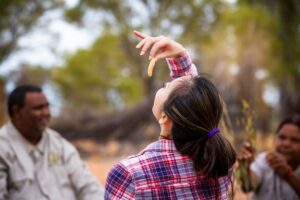
Photo: Tourism Australia
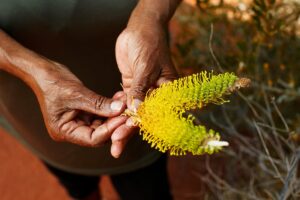
Photo: Tourism Australia
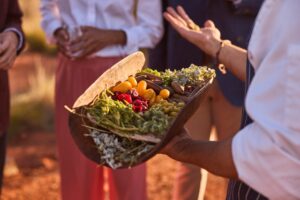
Photo: Tourism Australia & Tourism NT
🍇 Bush Tucker Plants & Fruits
Australia’s native plants are nutritional powerhouses, some of these ingredients may be surprisingly familiar to Canadian palates — with a uniquely Aussie twist. These ingredients appear in everything from salads to desserts, and many Indigenous communities still harvest them using traditional methods.
- Kakadu plum — Famous for its extremely high vitamin C content, this tart fruit appears in sauces, jams, and desserts. You also see this used in skincare.
- Quandong — A bright red “wild peach” used in chutneys, pies, and preserves.
- Finger lime — Known as “citrus caviar,” its tiny pearls burst with tangy flavour, perfect for seafood and also for garnishing cocktails.
- Muntries — Small, antioxidant‑rich berries with a crisp apple‑meets‑spice flavour.
- Warrigal greens — A leafy green similar to spinach, often sautéed or added to savoury dishes.
🍠 Bush Tucker Vegetables & Roots
Indigenous diets traditionally included a wide range of root vegetables and leafy greens, often roasted on hot coals, steamed in earth ovens, or added to stews. These ingredients are simple, earthy and deeply tied to the landscapes they come from. Common bush tucker vegetables include:
- Yams – A staple across many regions in Australia, yams are typically baked or roasted and are prized for their natural sweetness and high nutritional value.
- Bush potatoes (Wild Sweet Potato) – Found widely across Central Australia and the Northern Territory, these small, nutty‑flavoured tubers are dug from sandy soils and cooked whole in the embers of a fire.
- Sea celery – A coastal herb with a bright, parsley‑like flavour. Traditionally eaten fresh or added to broths, now used by chefs to bring a native twist to salads, seafood dishes and sauces.
🦘 Bush Tucker Meats & Game
For travellers eager to try something uniquely Australian, native proteins offer lean, flavourful options. The Aboriginal people have long been known as extremely proficient hunters and the two animals featured on Australia’s coat of arms (emu and kangaroo), were a favoured choice by the hunters. These foods were traditionally cooked over open fires or in earth ovens, and today you’ll find them in both rustic and upscale dining settings:
- Kangaroo — The most popular bush tucker meat, appealing to health-conscious eaters as it is high in protein, low in fat, and commonly served grilled or seared.
- Emu — A rich, dark meat often used in sausages or slow‑cooked dishes.
- Crocodile — Mild and slightly firm, often compared to chicken or fish.
- Barramundi — A beloved Australian fish with a buttery texture.
Other land animals which were commonly hunted and eaten, include goannas, snakes, wallabies, turtles, echidnas eels and native ducks. The Aboriginal people were also highly skilled at fishing in oceans, rivers and ponds to get their protein fix. Mud crabs, barramundi and other freshwater crustaceans, like marron were easy to catch and made for a delicious meal. Marron is now considered a luxury ingredient and can be found on the menus of high-end restaurants.
🌰 Bush Seeds, Nuts & Ancient Grains
Many Australian bush tucker staples come from seeds and nuts like mulga seeds and wattle seeds require soaking, pounding, grinding and baking before they are consumed. This careful ritual not only enhances the flavour and aroma but also improves digestibility and ensures they are safe to eat. These ingredients appear in breads, cakes and modern desserts across Australia today:
- Wattle seed — Roasted and ground for baking; tastes like coffee, hazelnut, and chocolate combined.
- Macadamia nuts — Native to Australia and now loved worldwide.
- Bunya nuts — Traditionally roasted or made into a paste. These are similar to a chestnuts in taste and appearance.
Other bush nuts which can be enjoyed include the macadamia nut, the peanut and the Australian cashew, all of which are used in traditional bush tucker recipes.
🐛 Bush Insects: The Original Superfoods
While it may surprise some Canadians, insects have long been part of Indigenous diets in Australia — and they’re gaining global attention for sustainability and nutrition. These foods offer a glimpse into ancient survival skills and deep ecological knowledge. A couple of commons ones in Australia are:
- Witchetty grubs — Arguably the most celebrated bush tucker, these grubs are high in protein and healthy fats, with a mild, nutty flavour. They can be eaten raw or roasted.
- Green ants — Zesty and citrusy; used to garnish cocktails and seafood.
🌿 Native Bush Herbs, Spices & Nectars
Australia’s native bushland provides spices are aromatic, bold and increasingly popular with chefs. These flavours elevate everything from grilled meats to baked goods:
- Lemon myrtle — Bright, citrusy, and perfect for herbal teas or desserts.
- Native ginger – can be added to meat dishes to increase flavour or infused in water and sipped on to ease an upset tummy.
- Mountain pepper — A spicy, peppery leaf and berry used in a variety of rubs and marinades.
- Native honey — Produced by stingless bees, with a delicate floral sweetness from the nectar of flowers from bloodwood and corkwood trees. This sweet treat goes perfectly on freshly baked bush bread or seedcake.
Other native herbs and bush tucker spices include mountain pepper, aniseed myrtle, native basil, blue-leaved mallee and tree gums which can be dissolved in water with honey to make sweets or jelly for children.
Why Aussie Bush Tucker Matters
Australian bush tucker is the foundation of the country’s oldest continuous food culture, shaped by ancient knowledge, and today it’s influencing modern Australian dining in powerful ways. While bush tucker ingredients and recipes might have made it to the mainstream and can be enjoyed at many restaurants, it’s important to remember their heritage. Bush tucker isn’t just food — it’s a living cultural tradition. For Canadian travellers, exploring Australian bush tucker is a meaningful way to honour and learn from the world’s oldest continuous culture. When you taste these ingredients, you’re experiencing:
- Indigenous knowledge passed down through millennia
- Sustainable, local harvesting practices
- A deeper connection to Australia’s landscapes and ecosystems
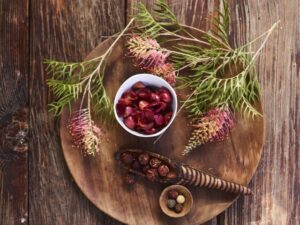
Photo: Tourism Australia
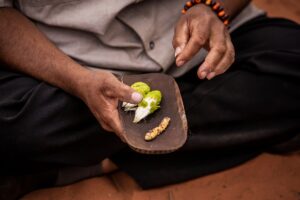
Photo: Tourism Australia
✈️ Ready for Your Down Under Adventure?
Your Taste of Australia starts with Downunder Travel
The team at Downunder Travel Canada can help you build an Australia travel itinerary that includes guided tours and experiences to explore elements of bush tucker and local delicacies such as:
- Indigenous‑led food tours
- Bush tucker foraging experiences
- Dining at restaurants featuring native ingredients